Post & Cantilever Shade Net Carports & Patio Covers
Canvas & Shearweave Window & Door Awnings
Canvas & Shearweave Outdoor Roller Blinds
Retractable Canvas & Shearweave Pergolas
OUTDOOR ROLLER BLINDS FOR CAPE TOWN PATIOS
Custom-Built for Your Property and Lifestyle.
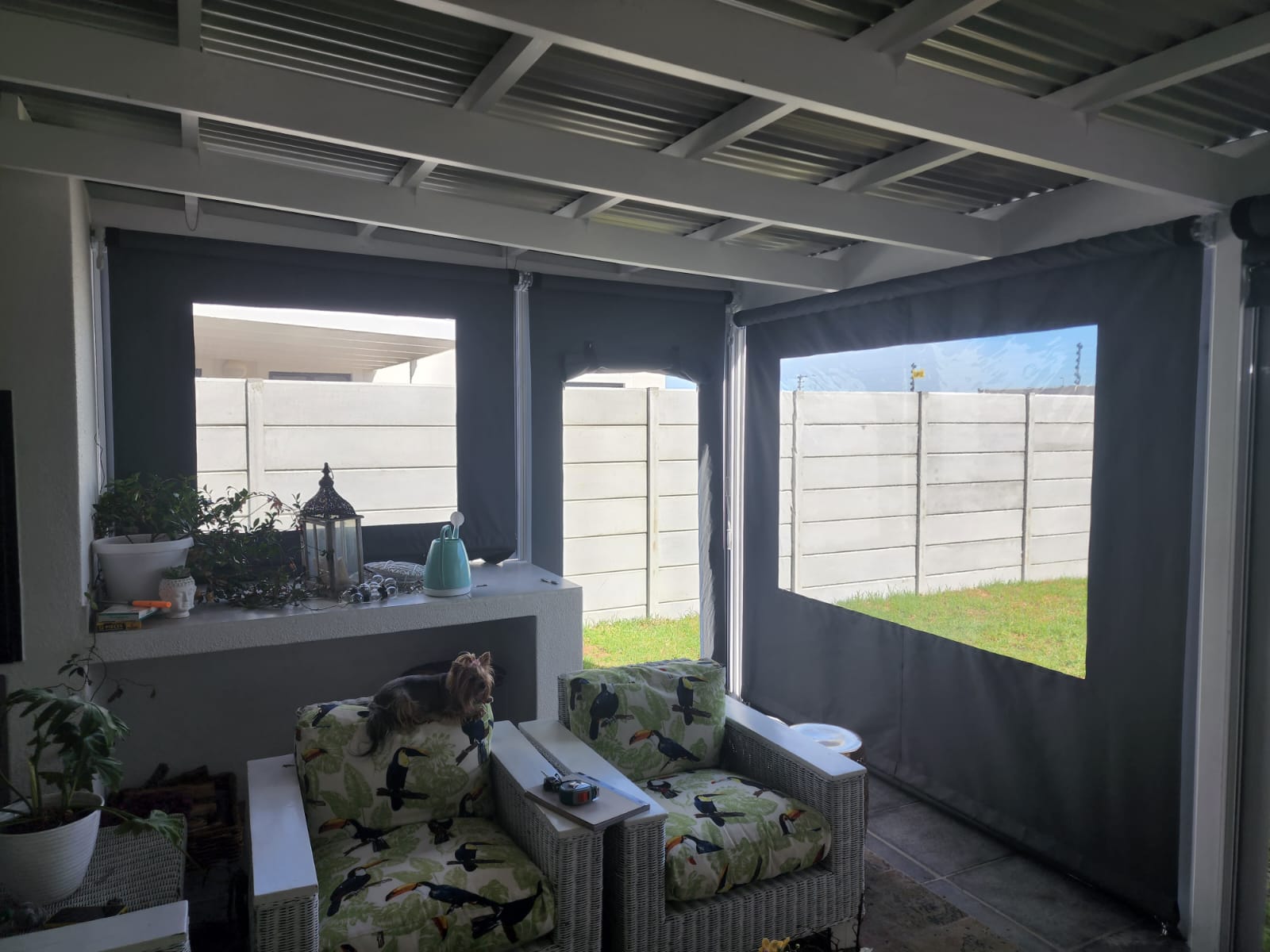
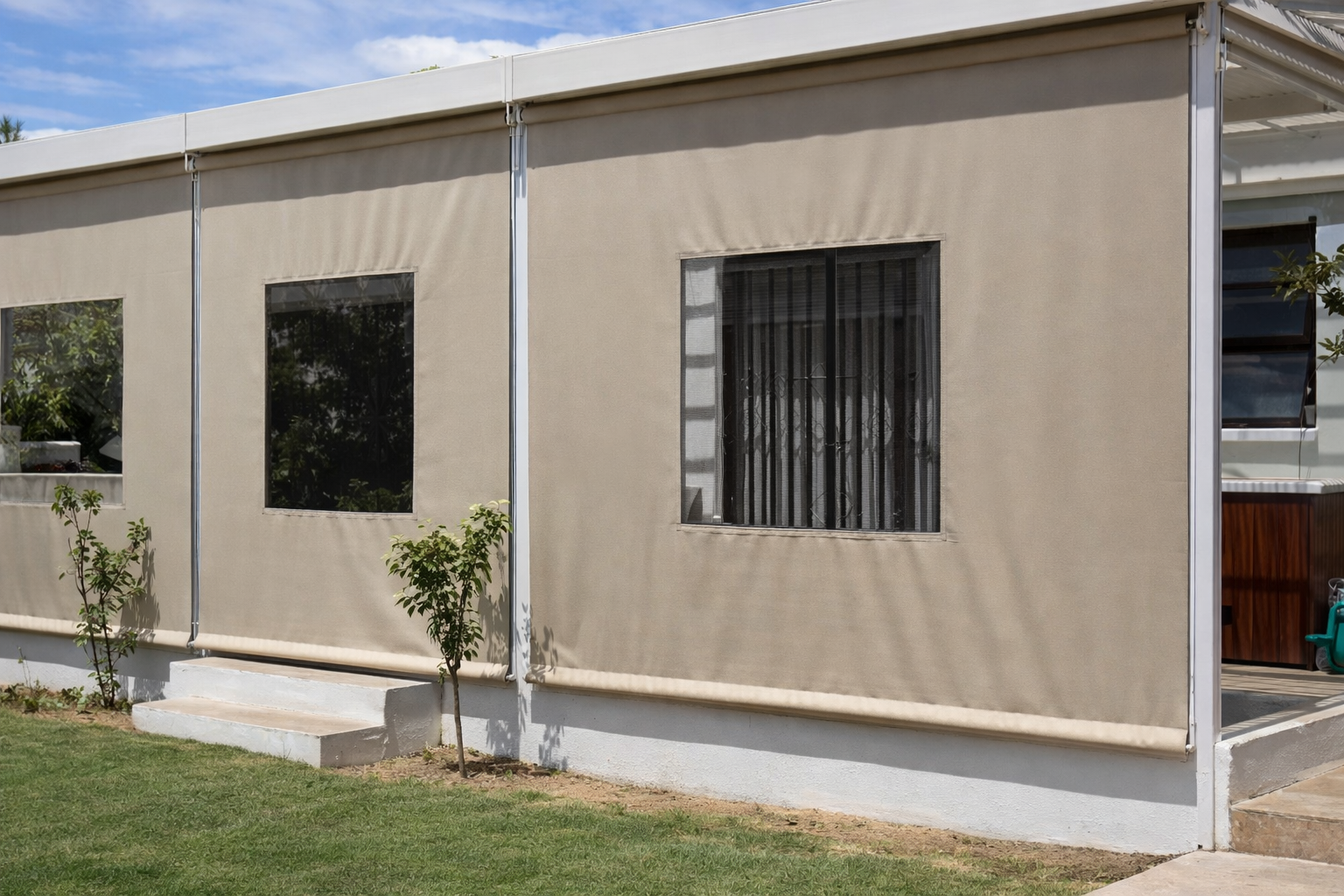
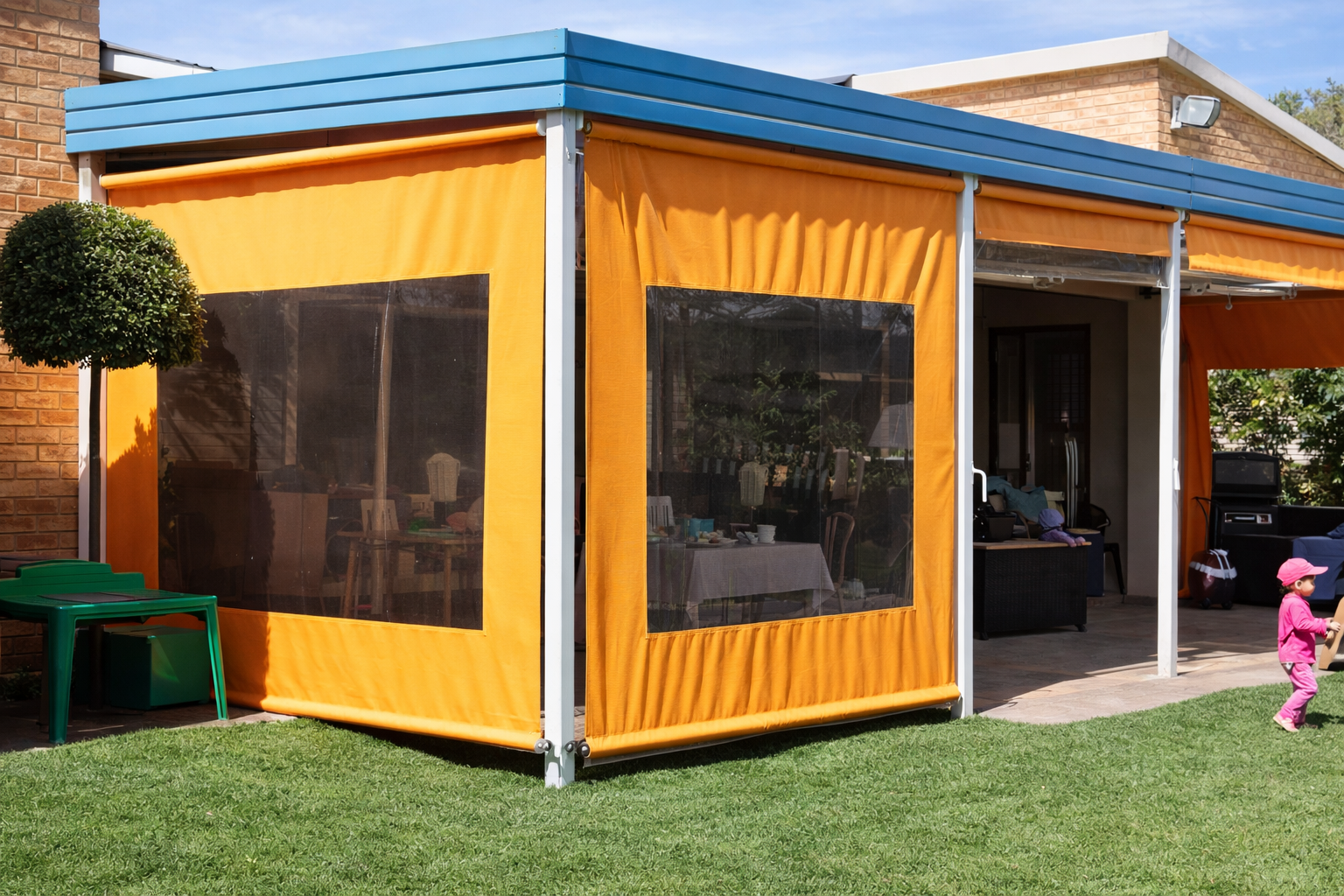
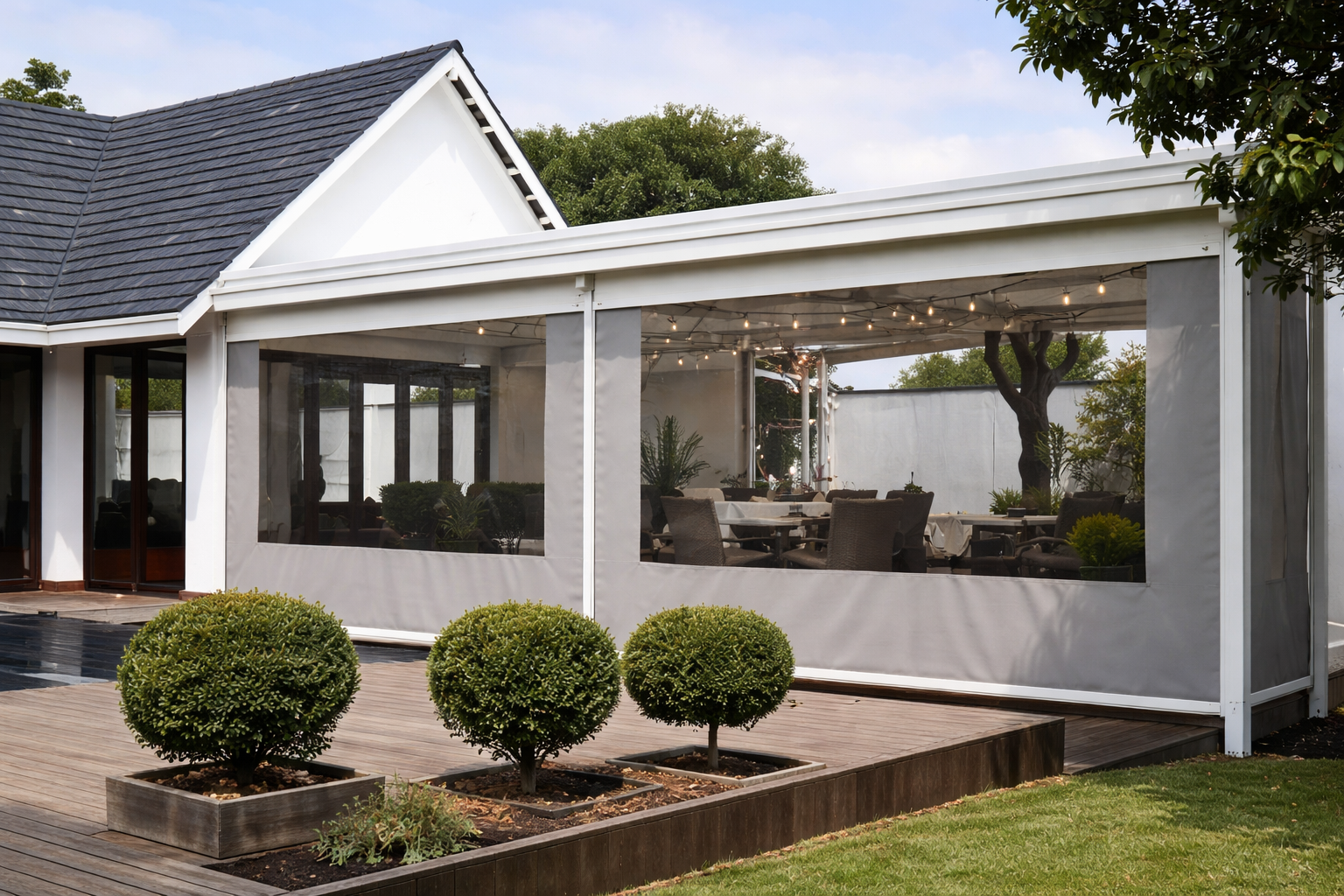
An outdoor roller blind (also called a drop blind or external roller screen) mounts above a patio opening and drops vertically to provide a flexible barrier against wind, rain, UV and visual intrusion. Unlike interior blinds, outdoor roller blinds are designed specifically for exposure to Cape Town’s coastal environment — they tolerate moisture, salt air and UV without degrading. Pro Shades SA manufactures and installs custom outdoor roller blinds for residential patios, restaurant enclosures, hospitality venues and commercial outdoor spaces across Cape Town. Each blind is sized precisely to your opening for a clean, professional finish.
Wind Protection – Reduces wind for a more comfortable space
UV & Heat Control – Blocks sun while keeping areas cool
All-Weather Use – Shields against rain and outdoor elements
Privacy on Demand – Instantly enclose your space when needed
Flexible Operation – Easily roll up or down as required
Ideal for Residential & Commercial Installations
Patios and verandas
Restaurant outdoor seating
Balconies and terraces
Estate entertainment areas
Office or retail entrances
Entertainment area privacy screens
Pool room side enclosures
Car wash and industrial weather screens
Security and privacy screens for boundary walls
Canvas Blinds
Full blockout for maximum weather protection and privacy
Shearweave Screens
Filters sun and wind while keeping views and airflow
Transparent PVC
Clear weather barrier with full visibility
A Seamless Installation Experience
On-Site Consultation & Measurement
25%
Custom Fabrication
50%
Professional Installation
75%
Final Inspection & Handover
100%
See our work
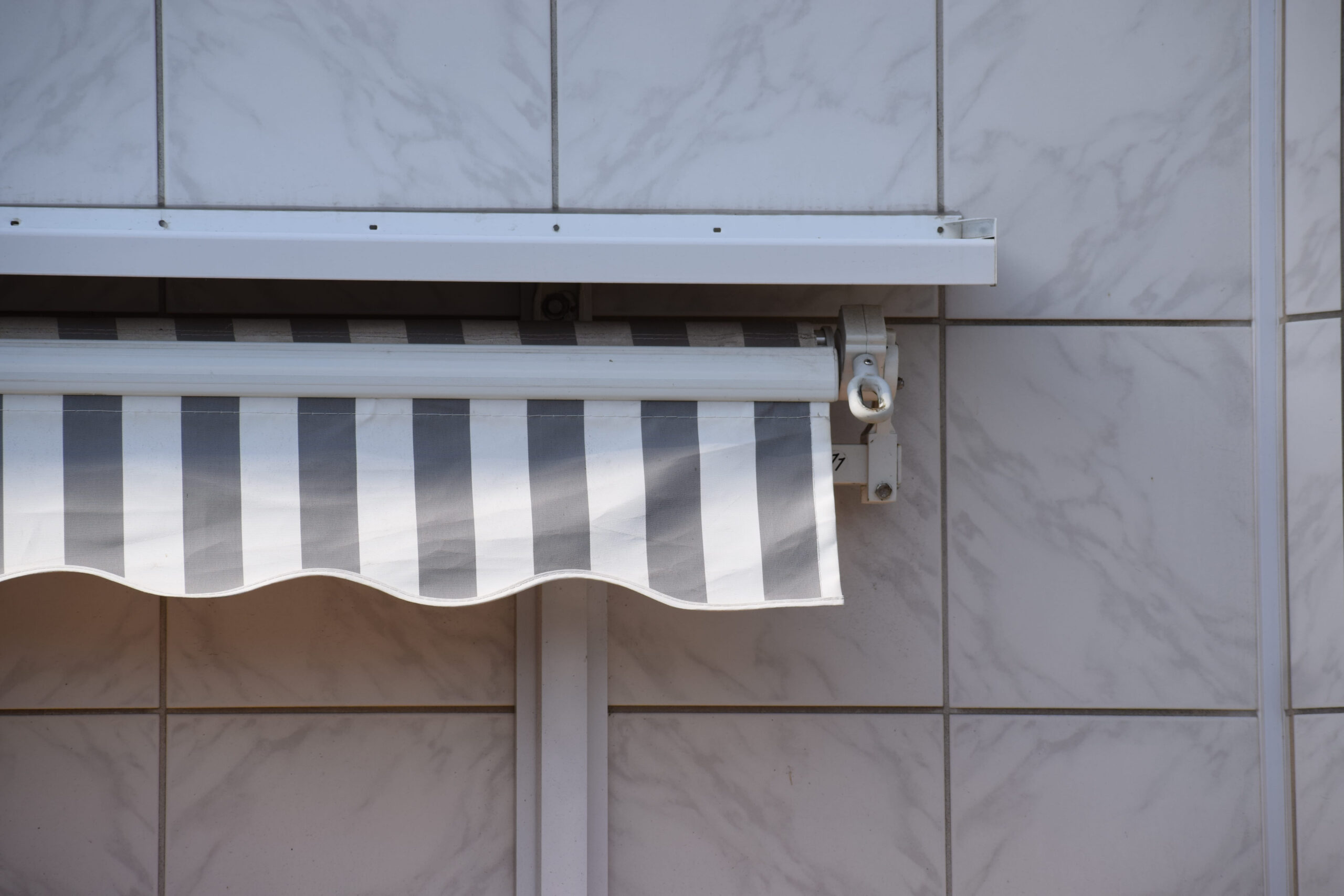
White and black striped awning on the facade of a modern building
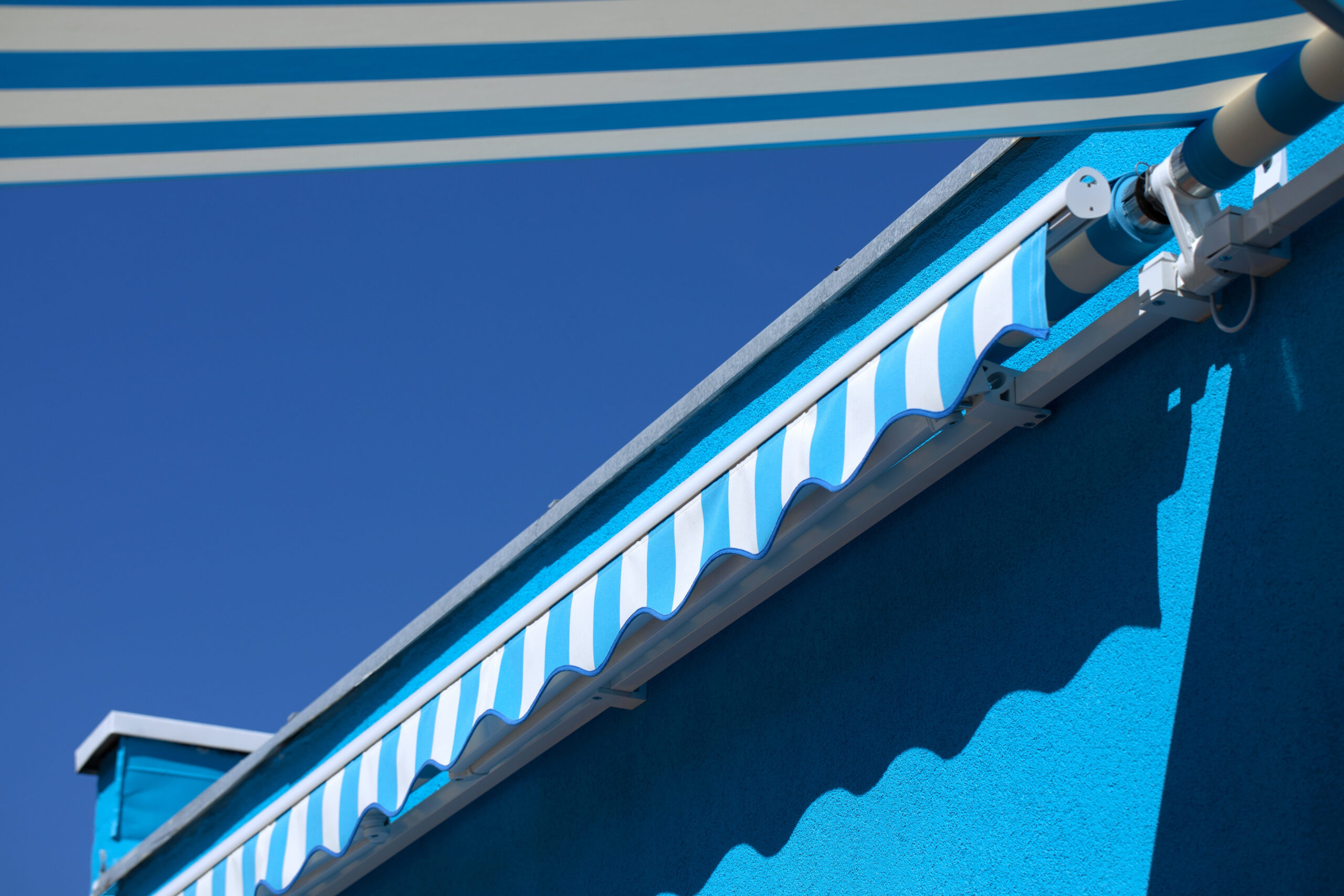
Outdoor part of blue dining umbrella for dining and blue skies
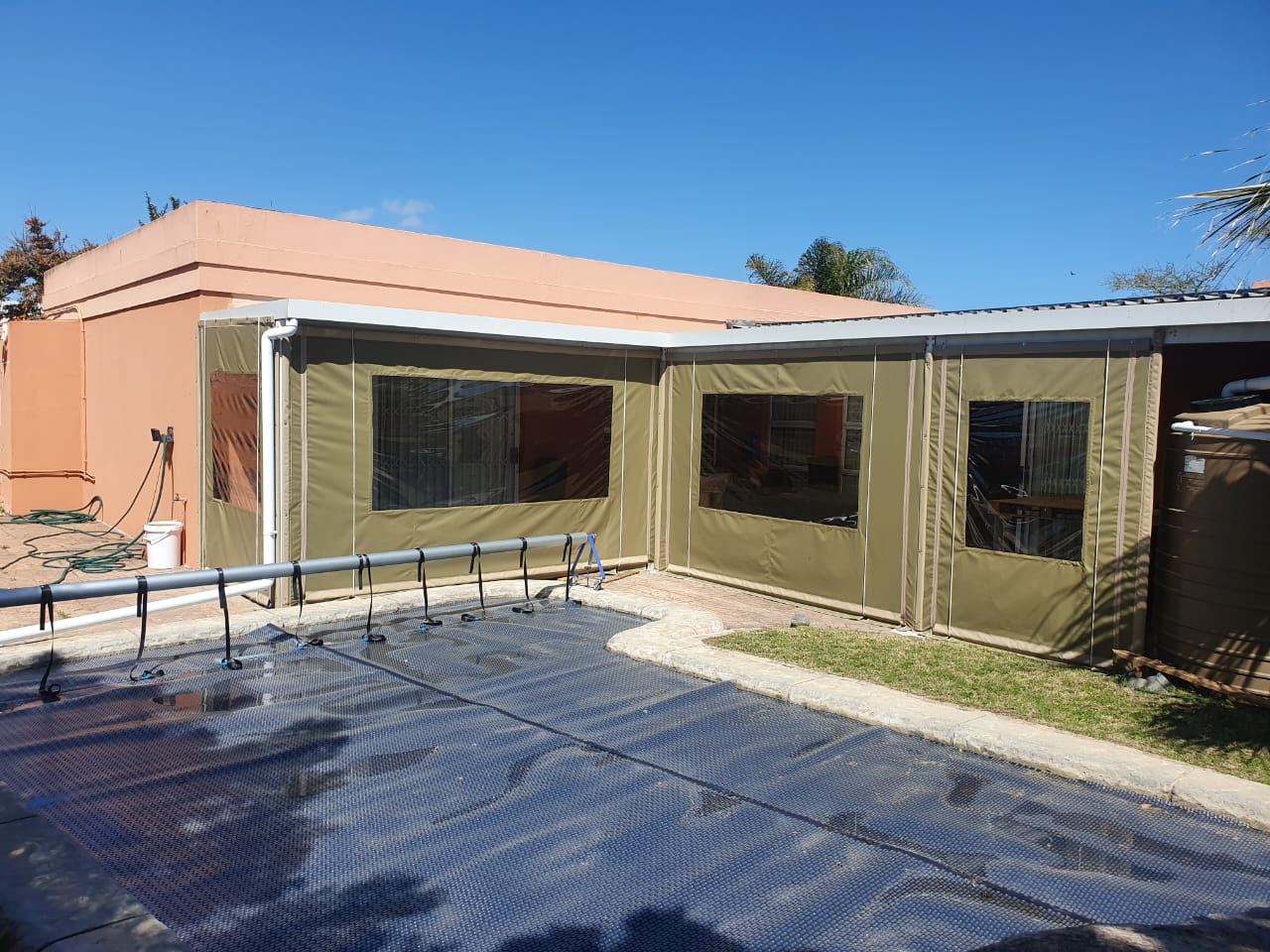
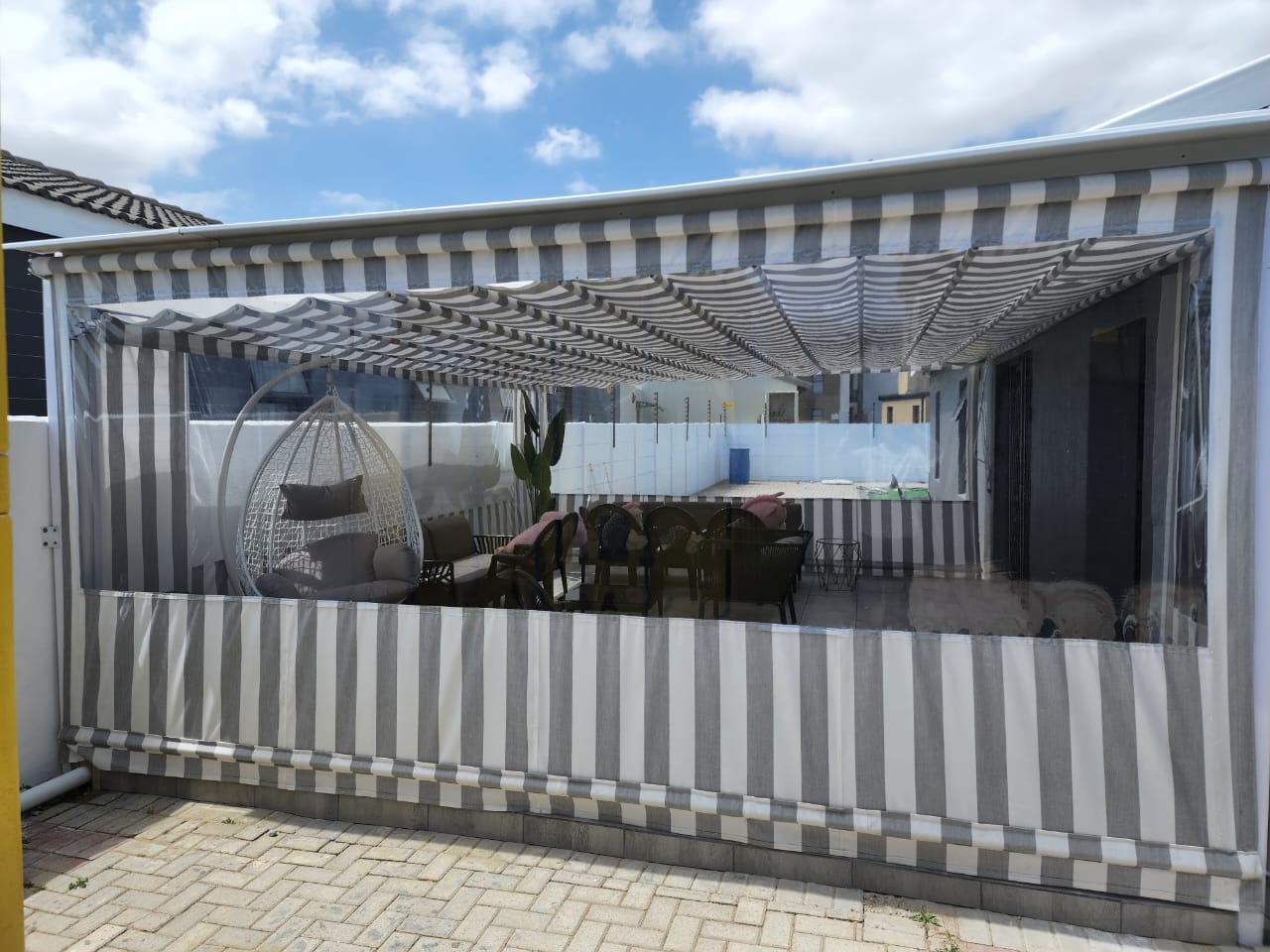
A spacious barbecue area with a canopy made from natural materials, enclosed. A patio with a table and chairs, sitting under a roofed structure.
ALUMINIUM CARPORT FAQs
WHAT IS THE DIFFERENCE BETWEEN AN ALUMINIUM CARPORT AND A SHADE NET CARPORT?
An aluminium carport uses an aluminium or steel frame with a solid roof (IBR, Chromadek or polycarbonate) — providing full waterproof coverage as well as UV protection. A shade net carport uses the same post framework but covers it with open-weave HDPE shade cloth, which filters UV but is not waterproof. Aluminium carports protect vehicles from both sun and rain; shade net carports protect primarily from UV and bird damage.
WILL AN ALUMINIUM CARPORT RUST NEAR THE COAST?
No. Aluminium does not rust — it forms a passive oxide layer that protects the underlying metal from further corrosion. Powder-coated aluminium maintains its appearance and structural integrity in Cape Town’s salt air environment without any special maintenance or periodic painting. This is the primary reason we recommend aluminium over painted steel for all coastal carport applications.
DOES A CARPORT REQUIRE COUNCIL APPROVAL IN CAPE TOWN?
In most cases yes — fixed carport structures require building plan approval from the City of Cape Town. Requirements vary by zoning and size. Our team can advise on the approval process. Some properties in estates may have additional HOA requirements which we can also assist with.
ROLLER BLIND FAQs
What is the difference between canvas and shearweave outdoor blinds?
Canvas provides full privacy and blocks all direct sunlight and light rain. Shearweave is an open-weave mesh that filters UV and wind while maintaining outward visibility and airflow. Canvas is chosen for maximum weather protection; shearweave for spaces where view retention and ventilation are priorities. We often recommend a combination of both for patios that need flexibility across different weather conditions.
Can outdoor roller blinds be fitted to pergola posts?
Yes. Roller blinds are frequently installed between pergola posts to create the side walls of an outdoor room. The blind roller mounts to the overhead beam and the blind tracks alongside the post. This allows the pergola to function as a fully enclosed space when the blinds are deployed, or as an open structure when they’re rolled up.
Can I see through a shearweave blind from inside?
Canvas roller blinds are water-resistant and will withstand moderate rain. They’re not intended to function as a substitute for a solid roof. Shearweave blinds are not water-resistant — water passes through the open weave. Transparent PVC blinds provide the highest level of rain protection and are the appropriate choice where dry enclosure is the primary requirement.
Are outdoor roller blinds waterproof?
Minimal. Canvas and shearweave fabrics should be cleaned periodically with a mild soapy water solution and a soft brush. Avoid high-pressure washing directly on the fabric. The mechanical components should be lubricated and inspected annually, which our team can handle as part of a service visit.
WE INSTALL ACROSS
Cape Town CBD
Sea Point
Camps Bay
Hout Bay
Constantia
Bishopscourt
Rondebosch
Claremont
Newlands
Kenilworth
Tokai
Pinelands
Bellville
Durbanville
Brackenfell
Kraaifontein
Milnerton
Table View
Bloubergstrand
Somerset West
Stellenbosch
Paarl
Franschhoek
Strand & Gordon's Bay